What Couples Therapy Looks Like When It Works (And When It Doesn’t).
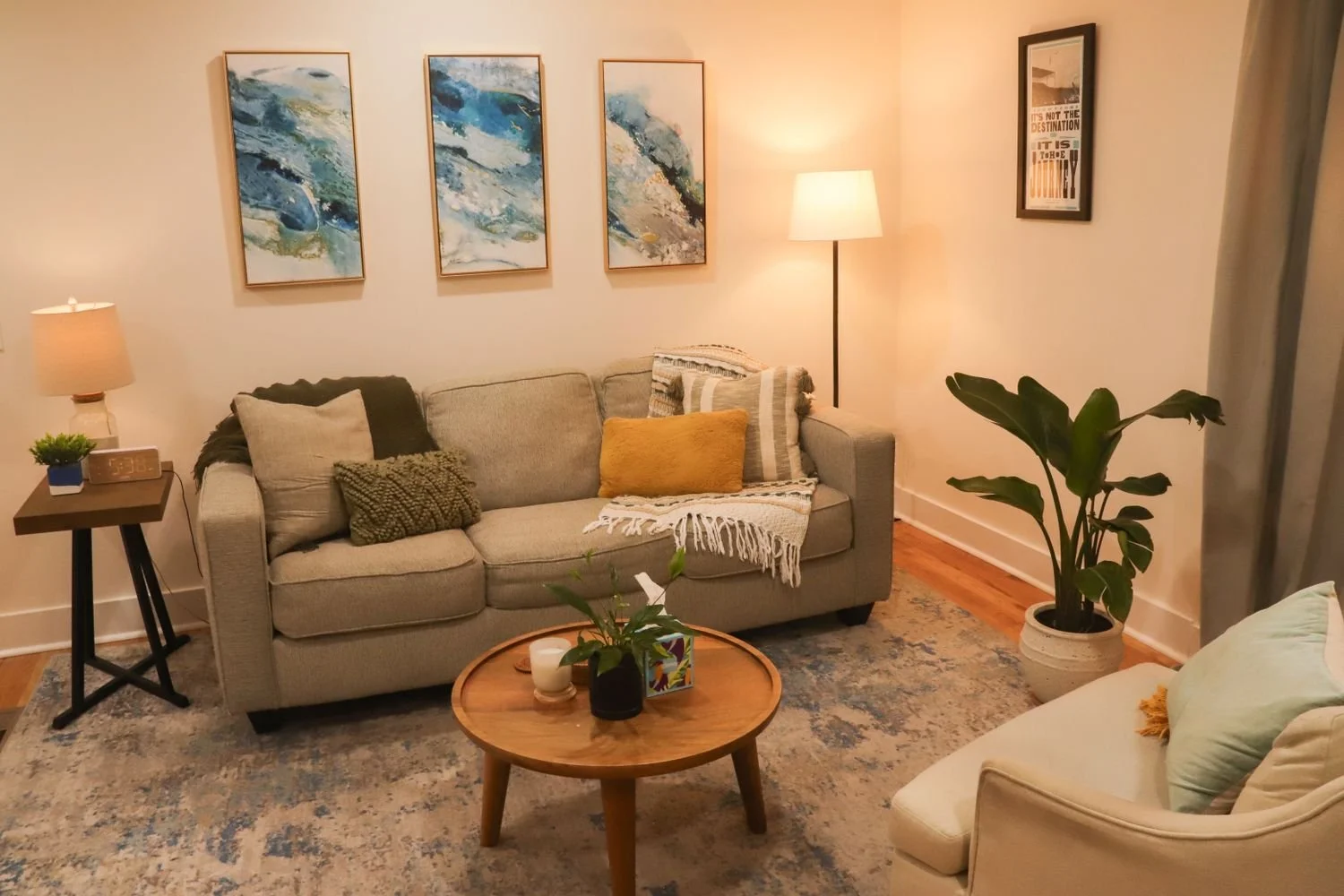
The office is a calm space to practice and explore what might be difficult in a stressful outside in the stressful and chaotic day-to-day flow of life and home.
There are a lot of myths and ideas about couples therapy. When to go to couples therapy, what to use couples therapy for, and what success or failure even looks like in couples therapy. The real answer is that complex and that every relationship is both dialectically (two things existing at the same time) uniquely different and never fully alone and has similarities to others. Both exist at the same time. Honoring two different dialectics is the basis of an individual therapy called DBT or Dialectical Behavioral Therapy with an idea that it is possible to both accept who you are now and also change at the same time. And that is the start of discussing what successful couples therapy looks like, the ability for the couple and therapist to be able to hold two or more ideas at the same time and connect through compromise and conflict instead of disconnecting. Have those two separate ideas and places where people could disconnect instead become points of connection and grown. I repeat often the phrase, “This room is big enough for both people, including all their emotions, their stories, their perspective, value, dreams, and more.”
I have two magnets in my office on my bookshelf. They both have a north and south pole. Conflict is not a dirty word, but it starts to become hurtful in people’s past when the magnet’s polarities both face towards each other at the same time, when time is not given to both perspectives. Couples therapy allows a third party to come along in the form of a couples therapist to slow things down and simply flip the magnets around so that instead of repelling each other they can connect. It sounds easy because it is that simple, we are all similar in that the solution to most problems would simply be to hear and be heard. However, again two things existing at the same time, which makes couples therapy also very difficult because every person and every relationship is unique too.
I am trained in the Gottman Method completing the Gottman Level II training. I use the Gottman Connect Assessment between the first and second couples therapy appointment to gain an understanding on which areas a couple can focus their work on. Gottman uses what is called the Sound Relationship House to conceptualize and easily portray what a healthy relationship might look like according to their relationship when it works for the strong relationships they have seen. At the foundation is friendship: understanding what is going on in the other person’s head and in their life while appreciating them and having fondness for them. Then continually reaching out and responding for bids to connect. That allows the couple to have a positive perspective of each other, that this person has my back more often than not. When you have that feeling then it makes conflict so much easier and out of that it makes conversation about the future dream you have as a couple or individuals and developing a shared meaning as a couple easier.
All this is pointing towards what it starts to look like when couples therapy is working. It is fun! There are more positive interactions than negative interactions by far in a relationship that works. Couples therapy is not always easy and can have difficult longing emotions like sadness, anger, grief, disgust, and those emotions do not always lead to connection. However, in the long run couples therapy can start to help you learn how these emotions have impacted your ability to connect as a couple, how differences in values has impacted you as a couple, how the differences in the ways you communicate has kept you from connecting, and how you can truly better get your needs met within the relationship to build up trust and commitment.
The goal of couple therapy is not to keep couples together. That is a myth and research shows that couples therapy is no more effective in keeping couples together than no couples therapy. But what couples therapy can do is allow you to learn and gain more insight about yourself to know what keeps you from growing closer to the people in your life, to learn more about yourself and your relationship, to learn more tools to be healthier in relationships and increase those positive interactions, and many other ways to build up that sound relationship house to build up friendship, connection, trust, commitment, conflict management, and ability to discuss dreams and make decision together.
Couples therapy that works can be like teaching fishing is not just giving a couple some fish. It can be creating moments that are pulls of a magnet together that become more attractive than the alternative. It can be learning how to do that outside of the therapy room and creating routines or finding resources to do that on a consistent basis so that you can keep building upon that on your own. It can be fun with many more positive interactions than negative ones. The most common emotion I hear when people are about to start couples therapy is that they are excited and nervous. Excited because of the possibilities and nervous because of how important it is to them.